
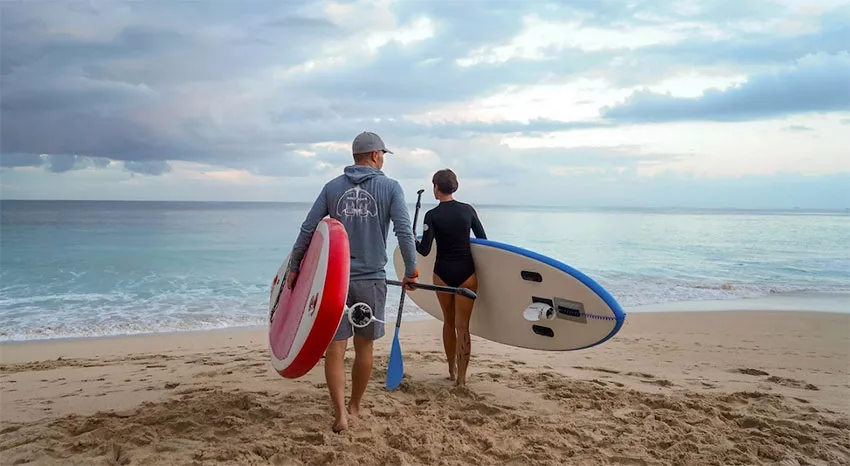
Born for Surfers.
Adopted by a Nation of Paddlers.
How a shoulder injury in Huntington Beach quietly gave birth to one of the world’s most popular electric SUP fins — and how the stand-up paddleboard community turned a surf invention into its own revolution.
The Day Everything Changed
Huntington Beach. Alex’s shoulder gave out mid-session. Sitting on the beach while Dmitri kept surfing, he had a simple thought: what if you could have paddle assist?
A motor inside a fin. Same board, same ocean — just less of the part that was keeping people out of the water.
A Mixed Reception — and a Crowdfunding Vote
The surf community didn’t exactly roll out the welcome mat. Surfing has its unwritten rules — you earn your waves, you paddle back yourself. An electric motor in a fin didn’t sit easily with that, and the team knew it.
But they also knew who they’d built it for: people with shoulder injuries, ageing joints, packed schedules, or those just starting out. People who simply wanted more time in the water.
The Kickstarter and Indiegogo campaigns settled the argument — at least commercially. 2,150 backers and over $1,000,000 raised proved that the product had found its people.
The Audience They Didn’t Expect
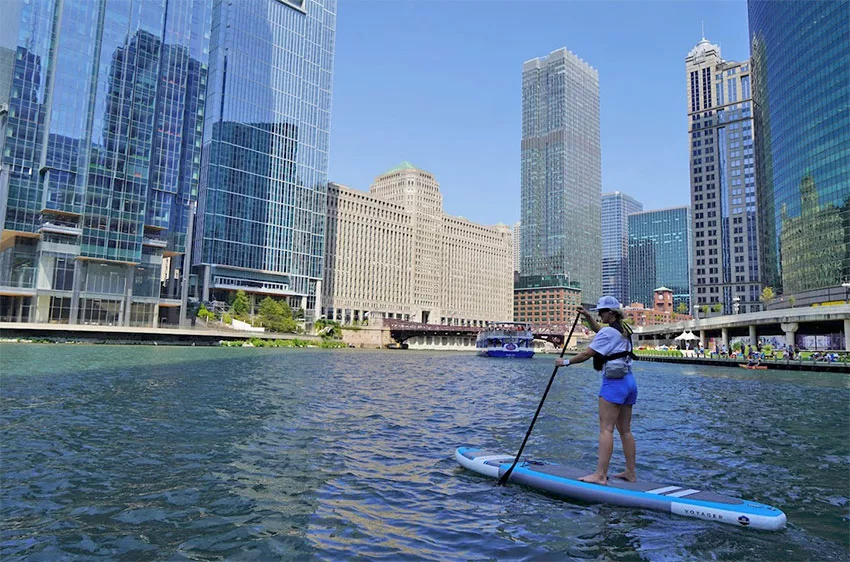
What the team didn’t anticipate was where the strongest demand would come from. As the product reached riders worldwide, stand-up paddleboarders turned out to be the most engaged segment — and it made a certain kind of sense.
On a surfboard, the fin gets you back to the lineup faster and helps you catch more waves. On a SUP board, it changes the scale of what’s possible. Longer distances, open crossings, and trips that were previously limited by endurance suddenly became realistic. The electric assist mattered more when sessions were longer and conditions more challenging.
Built for the SUP Community, by Demand
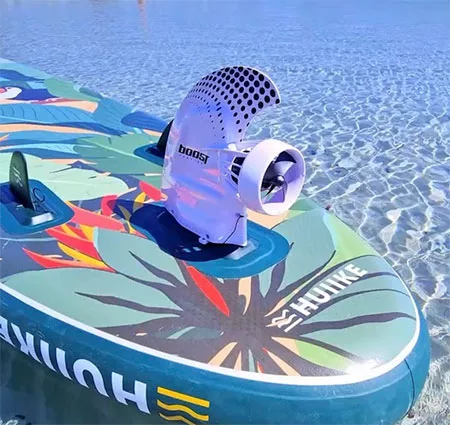
Boost Surfing listened. The result was the Boost Fin Long Range SUP Edition, engineered specifically for the demands of stand-up paddleboarding.
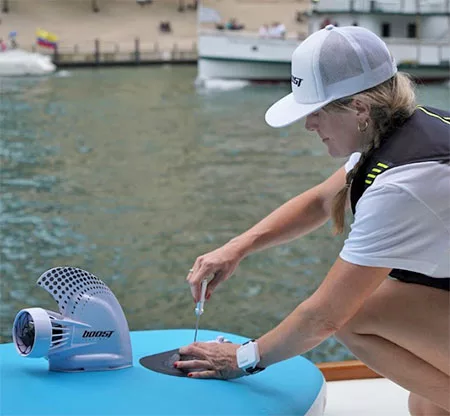
It offers twice the battery life of the standard fin and features a hydrodynamic profile tuned for the deeper, more sustained stroke mechanics of SUP. At the same time, it keeps the simplicity of a five-minute installation that fits 95% of boards on the market, without the need for tools.
It’s not a surfing product adapted for paddleboards. It’s a product born from the real-world requests of thousands of SUP riders who refused to settle for less time on the water.
Where They Are Now
Today, Boost Surfing counts more than 20,000 riders across over 40 countries. The product holds a 4.7 out of 5-star rating across more than 3,400 verified reviews, with a significant share coming from the paddleboard community.
Surfers took to it, but paddleboarders kept coming — covering bigger distances and pushing the product in directions the team hadn’t originally mapped out. That kind of adoption is hard to ignore, and Boost Surfing is genuinely glad it happened.
From Niche Idea to Industry Partnerships
That evolution has also led to real partnerships. iRocker, one of the most recognized names in the SUP world, came on board — a clear signal that the paddleboard community wasn’t just a happy accident, but a direction worth building toward.
That evolution has also led to real partnerships. iRocker, one of the most recognized names in the SUP world, came on board — a clear signal that the paddleboard community wasn’t just a happy accident, but a direction worth building toward.
What’s Next
The fin lineup continues to evolve with both surfers and paddleboarders in mind. More range, more fit options, and better performance across different boards and conditions are all part of the roadmap.
Surfers and paddleboarders want different things from the water — and Boost Surfing is working to meet both.